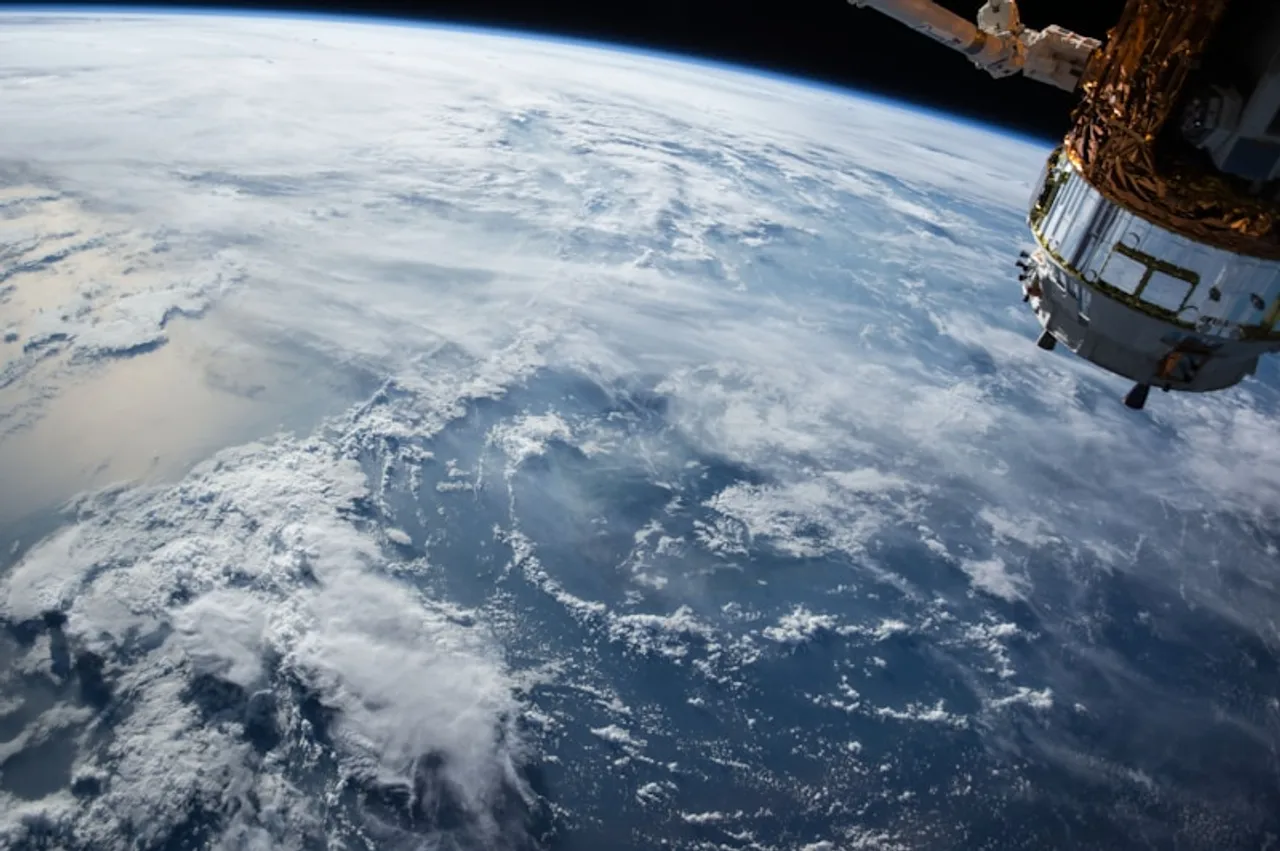
Four billion miles from Earth, the James Webb Space Telescope captures images containing more data than any human team could analyze in a lifetime. Each observation generates terabytes of information — spectral signatures of distant atmospheres, gravitational lensing patterns, infrared emissions from galaxies that formed 13 billion years ago. NASA has a problem that's actually wonderful: they have too much universe to look at and not enough eyes.
AI is becoming those eyes.
The Data Deluge
Space science has always been data-intensive, but the current generation of instruments has pushed beyond what human analysis can handle:
The James Webb Space Telescope generates roughly 57 GB of data per day. Each image requires calibration, artifact removal, spectral analysis, and comparison with existing catalogs. Before AI, a single research team might spend months on one observation. Now, AI preprocessing handles the routine work in hours.
The Vera Rubin Observatory (coming online in 2025) will photograph the entire visible sky every three nights, generating 20 TB per night. It's expected to catalog 37 billion objects. No human team can monitor 37 billion objects for changes. AI alert systems will flag objects of interest for human follow-up.
Mars rovers have a unique constraint: communication with Earth takes 5-22 minutes depending on orbital positions. Curiosity and Perseverance use AI to make autonomous navigation decisions, choose which rocks to sample, and prioritize which data to send home over the limited bandwidth.
AI Discoveries Already Made
This isn't theoretical. AI has already produced genuine scientific discoveries in space:
- AI identified two new exoplanets in Kepler telescope data that human analysis had missed — planets hidden in noisy data that fell below the threshold human reviewers used
- Machine learning classified millions of galaxies by morphology in the DESI survey, a task that would have taken citizen scientists decades
- AI predicted solar storms 30 minutes before they hit — enough warning to protect satellite systems and astronauts
- Neural networks detected gravitational wave signals in LIGO data with higher sensitivity than traditional matched filtering
- AI models are being used to simulate dark matter distribution across the universe, testing cosmological theories at scales impossible for conventional computation
The Autonomous Spacecraft Future
As missions venture deeper into space, communication delays make Earth-based control increasingly impractical. AI autonomy becomes not a nice-to-have but a necessity.
NASA's upcoming missions are designed with this in mind. Future Mars helicopters will use AI for fully autonomous flight planning. Europa Clipper will use AI to prioritize observations during its brief flybys of Jupiter's moon. Proposed missions to the outer solar system, where communication delays exceed an hour, will need spacecraft that can make scientific decisions independently.
The ultimate expression of this trend is the concept of self-replicating AI probes — spacecraft that can explore, analyze, and even build additional probes using materials found at their destination. This sounds like science fiction, but NASA's Innovative Advanced Concepts program has funded preliminary research.
The Collaboration Model
The healthiest dynamic in space science right now is AI as tireless assistant, human as curious director. AI processes the data, flags the interesting bits, and handles the repetitive analysis. Humans ask the questions, interpret the results, and decide what's worth investigating further.
It's a partnership model that works because space science has something most AI application domains don't: a shared commitment to truth. There's no incentive to game the system. The universe doesn't care about your metrics. And AI, freed from the perverse incentives that plague its applications in advertising, finance, and social media, is doing some of its most genuinely useful work among the stars.