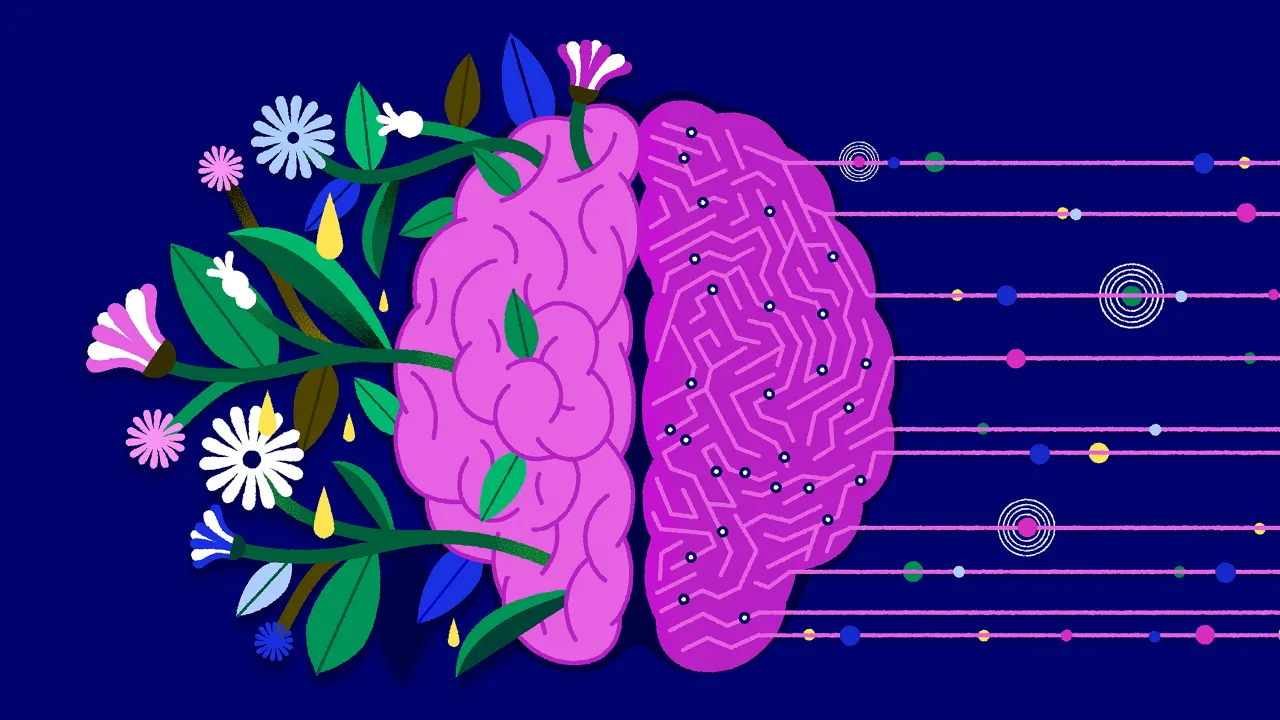
For decades, neuroscientists used brain complexity as a counterargument to AI hype. The human brain is incomprehensibly complex. AI models are brittle approximations. But by 2026, that comparison has collapsed. Not because we understand the brain better, but because AI models have become far more capable than anyone projected, and the computational requirements to match brain-scale processing are now within sight.
The Discontinuity
The scaling laws that dominated AI research showed consistent power-law relationships: compute increases, performance increases predictably. But around GPT-4 and Claude 3, scaling began to change. Emergent capabilities—abilities not present in smaller models—appeared. Reasoning that seemed impossible for models suddenly became feasible at larger scales. The relationship between compute and capability wasn’t just linear anymore; it had inflection points.
This is not analogous to brain scaling. But it does suggest that the narrative of “AI can never match human intelligence” was partly a failure of imagination about what was possible through pure scaling of algorithms.
The Numbers That Matter
The human brain operates at 20 watts. GPT-4 requires roughly 10 megawatts during inference. But that’s comparing energy consumption, not computational capacity. By other metrics—floating-point operations, parameter count, information processing rate—AI systems are in the same conceptual ballpark as brains. Different architecture, similar scale.
A 2026 analysis by cognitive scientists at Caltech suggested that the computational requirements to simulate human intelligence might be $10-100 billion in compute infrastructure and training—expensive but not inconceivable. By the standards of five years ago, this was heresy. By the standards of 2026, it’s reasonable speculation.
Where Brain and AI Still Wildly Diverge
- Learning efficiency. Humans learn new concepts from a handful of examples. Large AI models require millions. On this metric, the brain is 1,000,000x more efficient.
- Transfer learning. Humans learn to walk and apply that knowledge to dancing, climbing, and sports. AI models trained for one task struggle with similar tasks. Generalization remains a fundamental weak point.
- Embodied understanding. Much human intelligence emerges from having a body in a physical world. Current AI has no embodied experience. It’s all abstract representations.
- Metacognition. Humans know what they know and what they don’t know. AI systems often confidently wrong. They lack insight into their own reliability.
What This Actually Means
The brain hasn’t stopped being impressive. But the common assumption that replicating brain-scale intelligence was definitively impossible has proven unfounded. The brain-to-AI comparison that made sense as humbling reality check now feels like outdated rhetoric. What matters going forward is not whether AI scales to brain-scale complexity—it probably will. What matters is whether scaling leads to genuine understanding or just more sophisticated prediction.